The Minimalist Kitchen
Minimalism in the kitchen is not about having less — it's about having only what you actually use, in a space you actually love.
Six principles of the
Rigid Bike Fork minimalist kitchen
Intentional Possession
Every item in a minimalist kitchen was chosen. Nothing migrated in by accident. Everything earns its place by being actively useful.
Clear Surfaces
Visible surfaces are the primary design element. The countertop, the table, the stovetop — these should be close to empty. Negative space is not waste; it's breathing room.
Quality Over Quantity
One excellent knife outperforms a block of six mediocre ones. Buy the best version of fewer things. Quality items last longer and are more pleasant to use.
Single-Purpose Skepticism
Before adding any single-use gadget, ask: what does this do that something I already own cannot? Most kitchen gadgets fail this test. Most cooking needs only a knife, a cutting board, and a few good pans.
Visual Consistency
Matching containers, uniform cookware, consistent colors. Visual harmony in the kitchen reduces cognitive load. When things look cohesive, they feel organized — and they are.
The Exit Strategy
Every kitchen needs a regular donation point — a box or bag where items that are no longer used can wait before leaving. One in, one out is the long-term discipline.
"The question is not 'could I use this?' but 'do I use this?'"— Rigid Bike Fork Minimalist Kitchen Guide
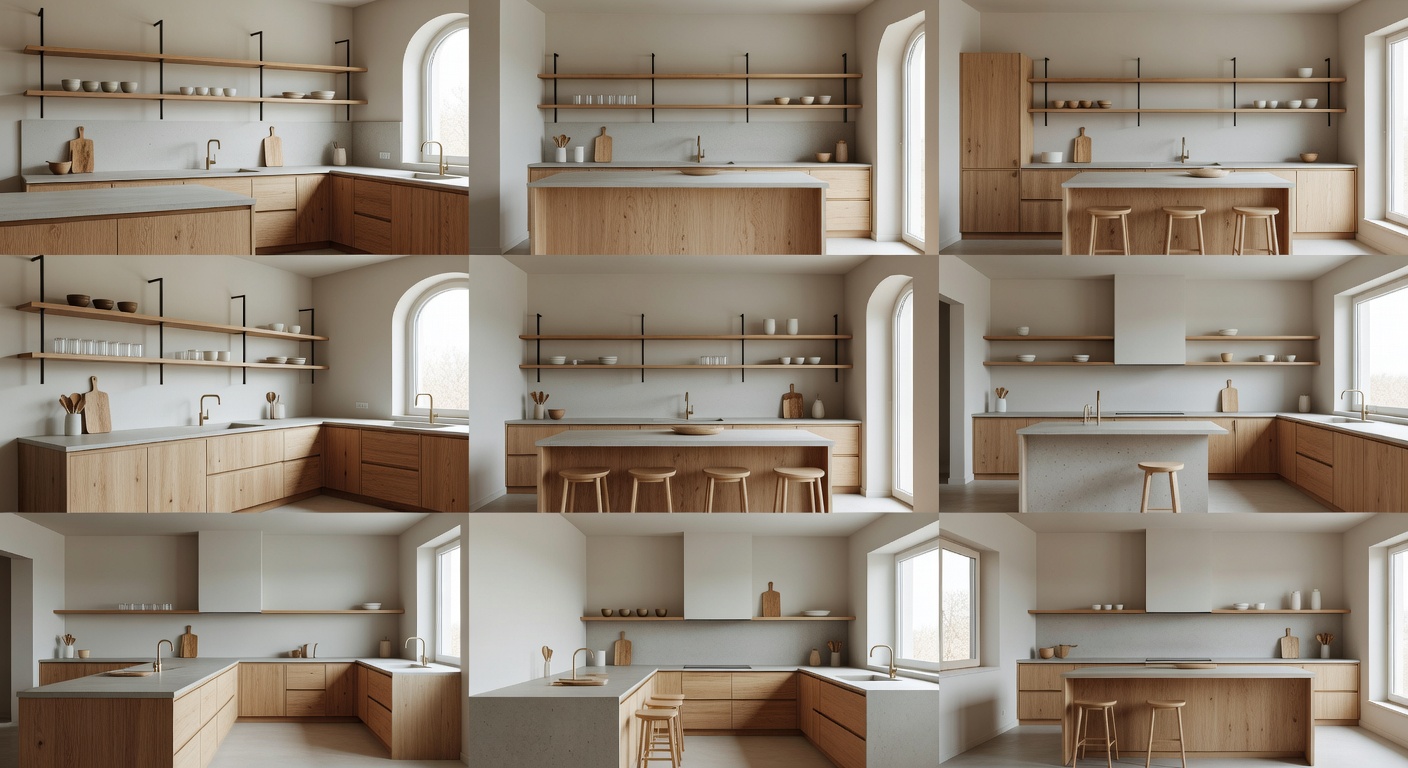
The four-step
kitchen edit
Empty the space completely
Drawers, cabinets, counters. Everything on the floor or a table. You cannot see what you have while things are stored.
Sort into three piles
Daily use, occasional use, and "hasn't been touched in 6+ months." The third pile likely leaves.
Return only what earns its place
Daily use items return first, in optimal positions. Occasional use goes to secondary storage.
Donate or store the rest
Items in the third pile: donate, store off-site, or discard. If they go back to storage, set a 3-month review date.
Minimal kitchens in practice
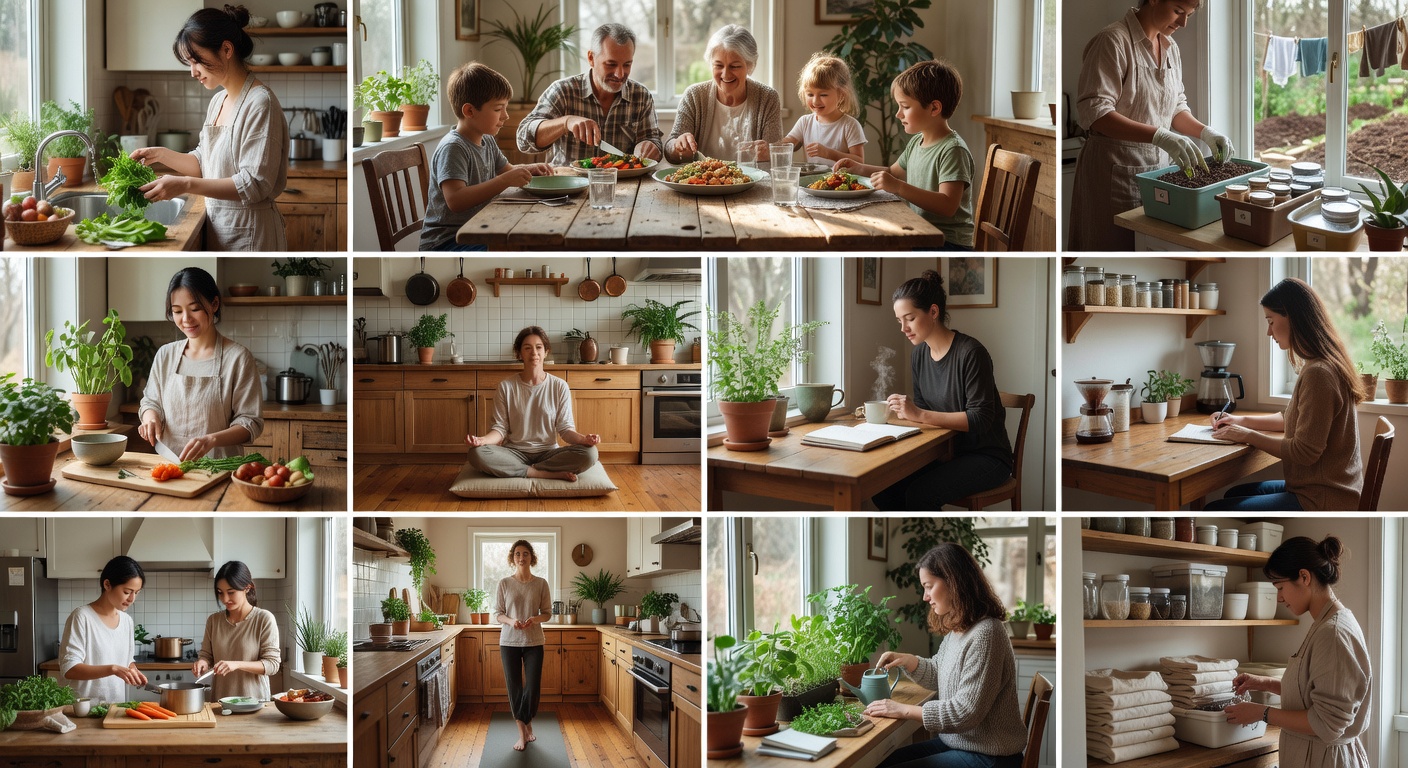
Clean communal kitchen and dining area
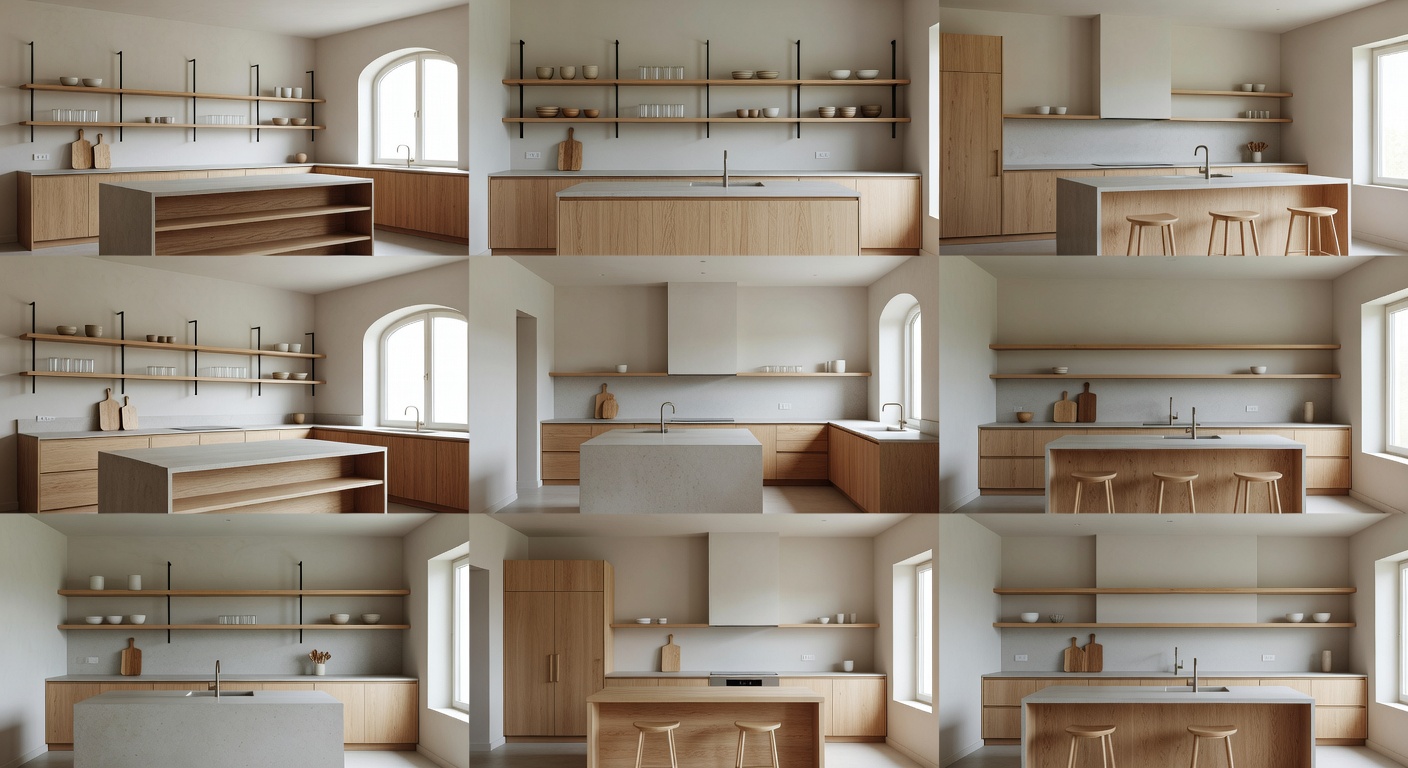
Natural light, clear surfaces, warm tones